


Literary voices with identity and projection
We represent writers who develop their work with depth, coherence, and creative commitment. Each author is part of a carefully curated catalog, where literary representation is based on respect for their individual voice and a professional marketing strategy.
Our work is not about accumulating names, but about building trajectories. These are the voices that today form part of the Cultura Red network: authors who write from the intimate, the historical, the social, or the symbolic, and who share the same conviction: literature is a form of thought and transformation.
Gladys Acevedo
Julia Cortés
Julio Ferrer
Greek Pains
Paty Liñán
Eduardo Orozco
Amelia Locksmith
Gladys Acevedo
Gladys Acevedo is an author of Latin American historical novels, represented by Cultura Red, a literary agency based in Madrid, Spain, with an international reach. Her work combines historical research, emotional narrative, and psychological depth, set against the political and social backdrop of 19th-century Argentina.
With solid and engaging writing, Gladys constructs stories that rescue historical episodes from a human perspective, where love, power, and tragedy intertwine with the destiny of her characters.
Discover
Our services
Historical novel set in the time of Rosas
The Three Deaths of Camila is set during a turbulent period marked by power struggles, hatred, and betrayals during the rule of Juan Manuel de Rosas. In this context of political tension and institutional violence, a love story emerges that defies social norms and the established order itself.
The novel tells the story of the relationship between the parish priest of the Church of Socorro, Uladislao Gutiérrez, and the young aristocratic woman from Buenos Aires, Camila O'Gorman, who face a tragic destiny by challenging the power structures of the time.
Nothing foreshadowed that the two young people would have the audacity to defy not only society, but death itself. Only the enigmatic Madame Perichón, Camila's grandmother, seemed to foresee the inevitable outcome.
The work positions itself as a historical novel with Latin American roots, where real events are intertwined with an intense and moving literary narrative.

Identity, memory and cultural projection
Beyond its historical reconstruction, Gladys Acevedo offers a reflection on power, freedom, and the capacity for decision-making in adverse contexts. The novel engages with the present by addressing universal themes such as forbidden love, political repression, and the price of autonomy.
Cultura Red not only supported the publication of the book, but also its entire creative and professional process:
- Literary correction
- Editorial design
- Construction of authorial identity
- Presentation curation
- Strategic dissemination
The book originates from Latin American roots, is published with an Iberian voice, and is projected as a cultural bridge between Argentina and Spain, consolidating the international mission of Cultura Red.

Julia Cortés Palma
Julia Cortés Palma is a children's author committed to emotional education and the transmission of values through relatable and meaningful stories. Represented by Cultura Red, a literary agency based in Madrid, Spain, her work is part of a project that focuses on providing professional support and publishing opportunities for authors with a distinctive voice.
Her writing is aimed at readers between the ages of 6 and 10, combining storytelling, learning, and educational activities that encourage reflection. Julia understands children's literature not only as entertainment, but as an educational tool that strengthens empathy, self-esteem, and critical thinking from an early age.
A children's author with an educational and emotional focus
Julia Cortés Palma's narrative style is characterized by its natural integration of history and pedagogy. Her texts are designed to stimulate the imagination without sacrificing the depth of their messages. The author explores themes such as self-confidence, respect, diversity, and kindness as a form of strength.
In a market where many children's books prioritize visual impact over content, Julia is committed to children's literature with values, carefully structured and designed to accompany educational processes both in the classroom and at home.
Their approach resonates with teachers and families seeking meaningful readings with emotional content and narrative coherence.

Guppy Guppy
Gupina Guppy is an interactive children's story set in a colorful underwater world. Through the adventures of its protagonist, the book conveys a clear message: kindness is not weakness, but a true form of strength.
The book combines storytelling and educational activities, incorporating a booklet of playful suggestions that encourages learning through play. This structure transforms reading into a participatory experience, where children not only receive the story but also interact with it.
Illustrated by Silvia Campos, the visual universe complements the story with dynamic images that reinforce the educational nature of the project.
Gupina Guppy is a work designed to work on values such as:
- Empathy
- I respect
- Self-confidence
- Teamwork
Cultura Red promotes its projection and circulation in educational spaces, bookstores and literary events, expanding its reach within the field of children's literature in Spain and Latin America.

Julio Ferrer
Julio Ferrer (La Plata, Argentina, 1976) is a journalist, writer, and professor, author of biographical essays and works of historical research related to critical thought, memory, and Latin American cultural expressions. Represented by CulturaRed, an independent literary agency based in Getafe, Spain, with an international reach, his work lies at the intersection of journalism, literature, and cultural engagement.
With a consolidated career in national and international media such as Página12, Tiempo Argentino and various publications linked to cultural and human rights organizations, Ferrer has dedicated a good part of his work to portraying key figures in journalism, politics and contemporary art.
In 2024 he published Antonio Gades. Art and Revolution (Ediciones B, Penguin Random House Spain), the first comprehensive biography of the celebrated Spanish dancer and choreographer.
Literary trajectory and critical thinking
Julio Ferrer is a member of the Network of Intellectuals and Artists in Defense of Humanity (REDH Argentina) and author of numerous books dedicated to relevant figures in Latin American journalism and politics, including:
- Osvaldo Bayer intimate
- Gregorio Selser. A legend of Latin American journalism
- Fidel Castro in Argentine memory
- Maradona. Football and politics
His work combines journalistic research, testimonial narrative, and historical analysis, providing a Latin American perspective on figures who have shaped contemporary political and cultural history.

Historical biography of Antonio Gades: art, commitment and memory
Antonio Gades. Art and Revolution is a historical and cultural biography that traces the artist's childhood and youth, his early interest in theater, literature, film, visual arts and photography, as well as his beginnings in dance and his political formation.
The book draws on historical documents, interviews, and international testimonies, including conversations the author had with prominent figures from Spain, Italy, France, Cuba, and Argentina who were part of the dancer's life. This rigorous research allows us to reconstruct not only Gades's artistic career but also his ideological and human dimensions.
The work explores his rise to prominence as a world-renowned dancer and choreographer, his commitment to the Cuban Revolution, and the profound emotional connection he forged with the Cuban people. After his death, Antonio Gades was immortalized in the history of Spanish and flamenco dance, becoming an international icon.
More than a traditional biography, the book functions as a multifaceted portrait: artist, activist, creator, and cultural symbol.

Greek Pains
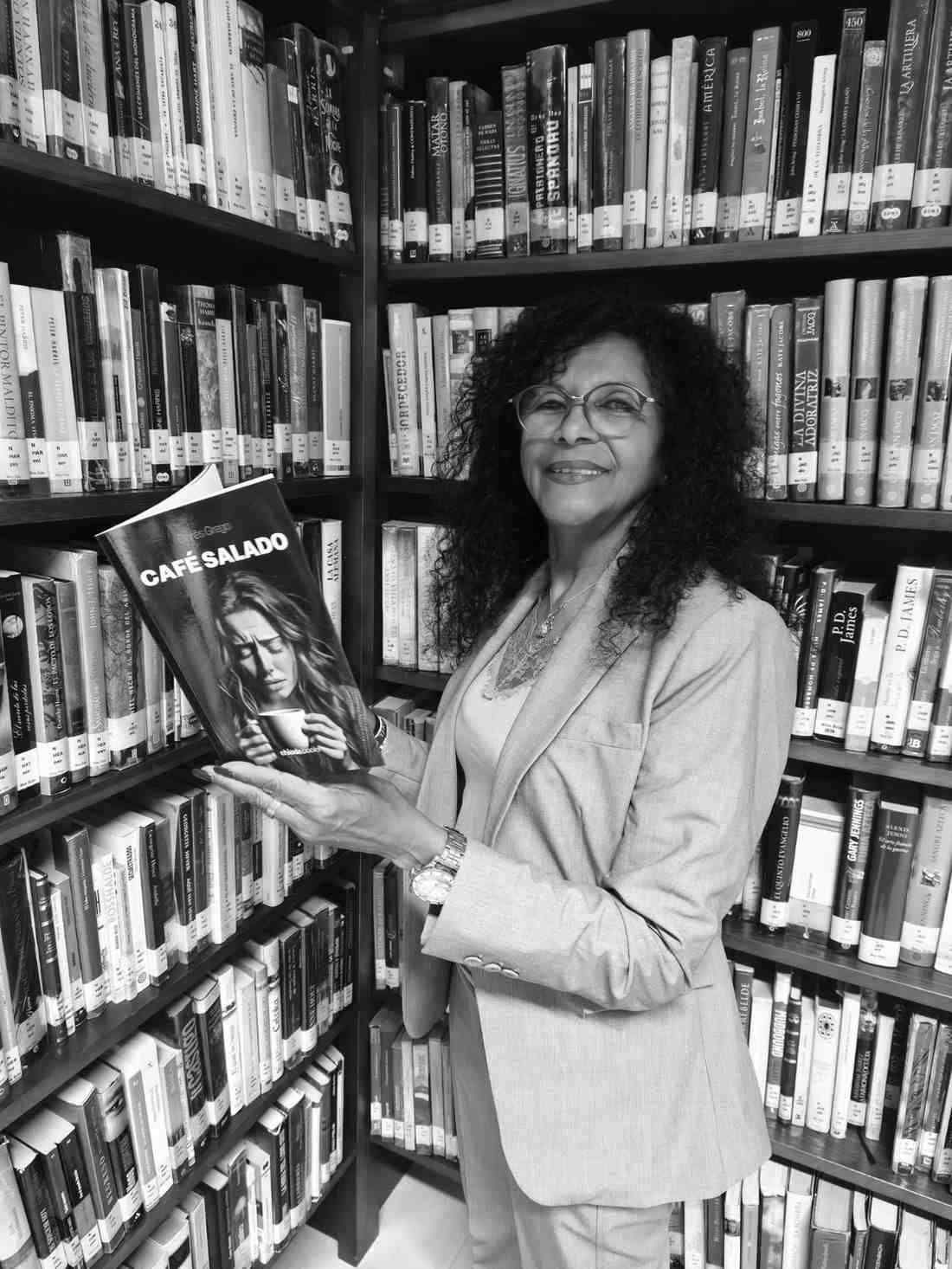
Dores Grego is the author of contemporary testimonial novels, represented by Cultura Red, a literary agency based in Madrid, Spain, with an international reach. Her work falls within the current social narrative, sensitively and profoundly addressing themes related to gender violence, memory, and female resilience.
With clear, direct, and emotionally honest prose, Dores Grego constructs narratives that not only denounce injustice but also accompany processes of transformation. Her writing stems from lived experience and becomes a tool for collective reflection.
Testimonial literature and memory as an act of resistance
In Café Salado, Dores Grego develops a novel with an intimate and testimonial tone that narrates, from the perspective of a female survivor, the multiple layers of gender violence: the psychological, the symbolic and the physical.
The author does not merely expose the pain. Her narrative goes beyond denunciation and proposes a human journey where writing becomes an act of resistance. Memory appears as a form of justice, and the word as an instrument for reclaiming one's own voice.
Through a carefully crafted narrative structure and heartfelt prose, the novel addresses:
- The imposed silence
- Internalized guilt
- The reconstruction of identity
- The healing process
Dores Grego constructs a story where pain is not the end point, but the starting point.
A necessary novel in the current context
Café Salado stands out as a significant work within the literature on gender violence, not only for its subject matter but also for its humanized approach. The author manages to transform the wound into narrative power, offering the reader an experience that challenges and supports them.
The novel invites us to break the silence and make visible the realities that persist for many women. At the same time, it offers hope: the possibility of rebuilding and achieving autonomy.
In a social context where the debate on equality and rights remains relevant, the work becomes a literary space for reflection and empowerment.

Paty Liñán
Paty Liñán, the pen name of Patricia Moreno Liñán, is a contemporary Spanish poet represented by Cultura Red, a literary agency based in Madrid, Spain, with an international reach. Born in a small town in the mountains near Madrid, she discovered poetry at a young age, transforming words into a space for reflection, identity, and empowerment.
Her work is characterized by a lyricism imbued with sensory imagery and recurring symbols such as the sea, death, memory, and identity. In her writing, the intimate and the social, the individual and the collective, coexist, generating a constant dialogue between personal experience and historical context.
Contemporary poetry between memory and resistance
Paty Liñán's poetry moves in a realm of synthesis and depth. Her verses do not seek excessive ornamentation, but rather emotional condensation. Each poem functions as an exploration of the past to understand the present, a search for meaning through language.
His literary work includes themes such as:
- Female identity
- Individual and collective memory
- Personal transformation
- The intimate resistance
- The passage of time
Her writing combines delicacy and forcefulness. The symbol of the sea, for example, is not just a landscape, but a metaphor for change and constant movement. Death appears not as an end, but as a transition and existential reflection.
Within the Cultura Red catalog, Paty Liñán represents a commitment to contemporary poetry with its own identity, capable of connecting with readers who seek depth without artifice.

(r)Evolution: inner transformation and silent revolution
(r)Evolution is a title that encapsulates two fundamental impulses in contemporary poetry: profound change (revolution) and intimate growth (evolution). The decision to highlight the “r” in parentheses is not a casual typographical choice, but rather an invitation to read it with a double meaning.
The book proposes that all social transformation begins with an inner transformation. Revolution is not always loud; sometimes it is silent, slow, and personal. And authentic evolution involves going through internal conflicts to emerge with greater awareness.
In this work, Paty Liñán offers poems that oscillate between introspection and a critical perspective on the world around her. Her verses invite us to rethink identity, question inherited structures, and recognize the strength that arises from intimate processes.

Eduardo Orozco Jaramillo
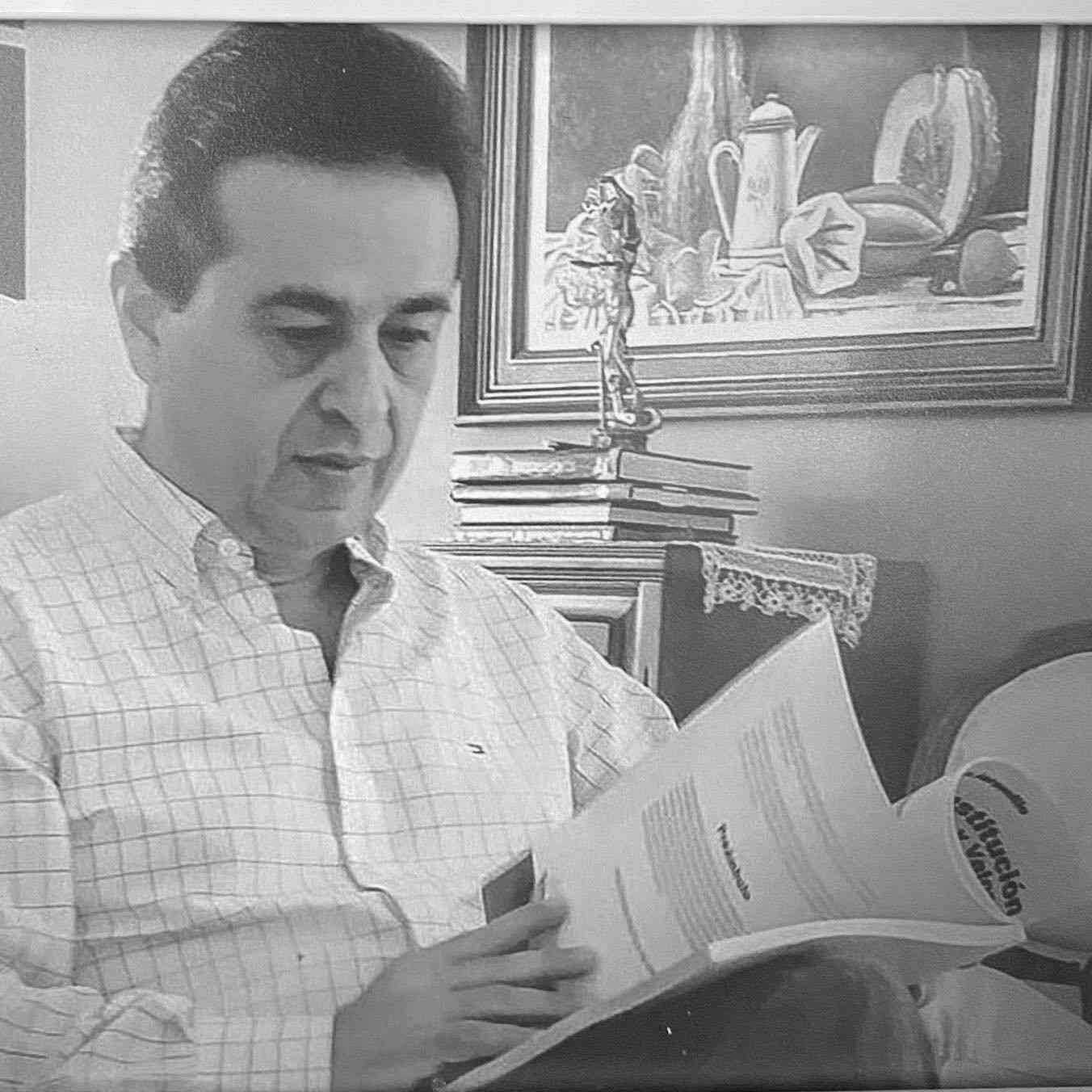
Eduardo Orozco Jaramillo is an author of Latin American mythological and cultural narratives, represented by Cultura Red, a literary agency based in Madrid, Spain, with an international reach. His work recovers the ancestral memory of the American continent and reinterprets it from a contemporary, critical, and literary perspective.
With an agile and evocative style, Orozco constructs stories that engage with oral tradition and current reality, turning myth into a tool for social reflection.
Latin American myths in a contemporary key
In America: Myths and Legends, the author invites us to explore the vast territory of ancestral imagination and popular memory. These are not mere traditional tales, but rather a literary reconstruction of figures that continue to resonate in the collective imagination: La Llorona, the Nahual, the Mother of the Mountain, the Caiman Man, the Wendigo, among many others.
These fantastical beings do not appear as isolated folkloric elements, but as living symbols that embody the fears, longings, and resistance of the peoples of Latin America. Through a fluid narrative, Eduardo Orozco links oral tradition with contemporary issues such as:
- The loss of forests
- Structural violence
- Migrations
- Cultural resistance
Myth ceases to be the past and becomes a critical mirror of the present.
Ethnographic and territorial value
One of the book's greatest contributions is its ethnographic and geographical dimension. Each story incorporates references to the territory of origin and the worldview of the communities that have kept the history alive for generations.
America: Myths and legends are not bedtime stories, but stories to awaken us. It is a reminder that cultural identity is woven from the balance between mythical memory and contemporary challenges.
From Cultura Red, its representation seeks to strengthen the circulation of this work in publishing and cultural spaces interested in Latin American literature, oral tradition and contemporary symbolic narrative.

Amelia Locksmith
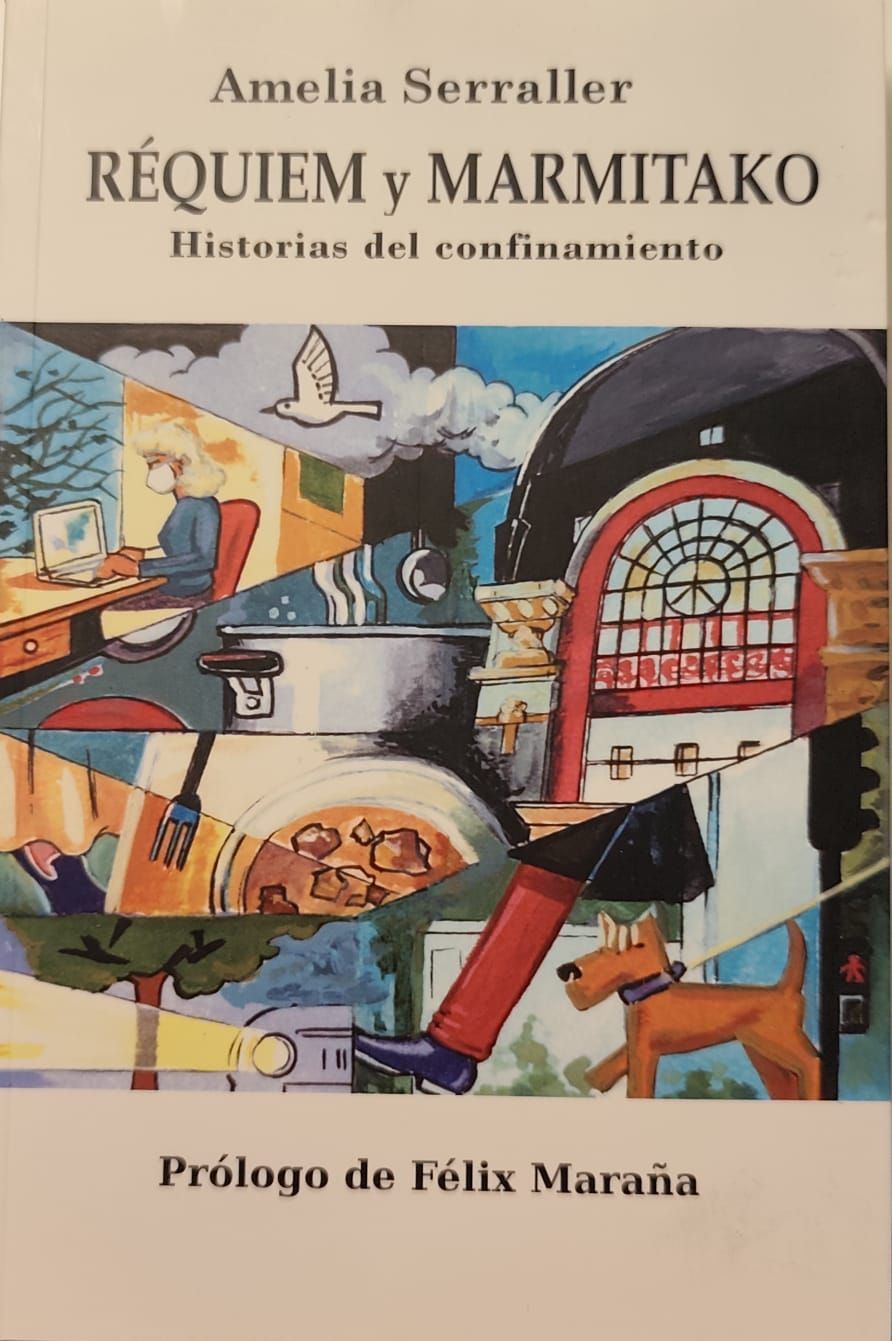
Amelia Serraller is an author whose writing explores memory, intimacy, and a sensitive observation of the everyday. Her work occupies that space where the personal becomes collective and where small, daily scenes acquire literary depth. Represented by Cultura Red, her career is built on a careful use of language, emotional reflection, and an honest perspective on the human experience.
Amelia's narrative doesn't seek immediate impact, but rather lasting impact. Her style combines subtlety, introspection, and a unique ability to transform the seemingly simple into literary material. Each story invites the reader to pause, observe, and reflect.
A literary voice that explores the intimate
Amelia Serraller's writing is characterized by meticulous attention to detail and a sensitivity that permeates every scene. Her prose works with silences, everyday gestures, and domestic spaces that, far from being secondary, become stages for emotional transformation.
Her writing explores themes such as fragility, memory, coexistence, and the passage of time. Without unnecessary drama, she crafts narratives that oscillate between melancholy and irony, creating a reflective atmosphere that invites leisurely reading.
Her work engages with the present without sacrificing literary depth. It is a style of writing that observes the world attentively and returns it to the reader from a personal and conscious perspective.

Requiem and Marmitako: Stories from Lockdown
Requiem and Marmitako brings together stories and intimate scenes shaped by the collective experience of lockdown. Through an everyday and sensitive lens, the book explores how domestic life, memory, and human connections are transformed when the world comes to a standstill.
The narrative alternates between moments of introspection and everyday situations—cooking, working from home, observing the city from the window—which become symbols of emotional resilience. What seems trivial acquires narrative weight, and what seemed permanent is revealed to be fragile.
More than a literal chronicle of a historical period, the work functions as a mosaic of sensations. It reflects on urban silence, shared solitude, and the new forms of coexistence that emerged in an exceptional moment. The reader finds in these pages not only a testimony, but also an invitation to rethink time and the meaning of the everyday.
Professional representation and support
At Cultura Red, we understand literary representation as a strategic and sustained support process. We don't work by accumulating names, but by building careers. Each author in our network has a personalized strategy aimed at strengthening their identity, positioning, and publishing reach.
Our work includes editorial analysis of the work, promotion on cultural networks, management of opportunities at fairs and institutional venues, and collaboration with publishers and translation projects when the profile allows. Representation is not a one-off transaction: it is a process that combines artistic vision and professional structure.
From our headquarters in Madrid (Spain), we promote the visibility of authors in Spain, Latin America and India, consolidating a cultural bridge that broadens horizons without losing the essence of each project.
Your voice deserves to be accompanied.
At Cultura Red, we champion transparency, respect for copyright, and ongoing dialogue. We believe that literature needs genuine support, editorial discernment, and a network that ethically and consistently opens doors.
If you'd like to be part of a literary agency that combines artistic sensibility and international reach, let's talk.